Sunday, November 7, 2010

Saturday, November 6, 2010

Friday, November 5, 2010

Hyundai


Hyundai Motor Company a major company in the Hyundai Kia Automotive Group which is the world’s fifth largest automaker as of the end of 2009.[1] (In 2008, Hyundai ranked the eighth largest auto maker, without including Kia.[2]) and the world's fastest growing automaker.[3][4]

Headquartered in Seoul, South Korea, Hyundai operates the world’s largest integrated automobile manufacturing facility[5] in Ulsan, which is capable of producing 1.6 million units annually. The company employs about 75,000 persons around the world, Hyundai vehicles are sold in 193 countries through some 6,000 dealerships and showrooms worldwide.

The Hyundai logo, a slanted, stylized 'H', symbolizes the company shaking hands with its customer. Hyundai translates from the word "modernity", and is pronounced as "Hyon-dae" in Korean.


Hummer


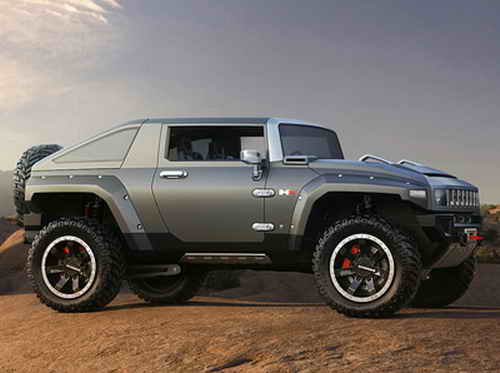
Hummer was a brand of trucks marketed since 1992 by AM General when it began selling the civilian version of the M998 High Mobility Multipurpose Wheeled Vehicle (HMMWV or Hum-Vee).

In 1998 General Motors purchased the brand name and marketed three vehicles: the original Hummer H1, based on the military High Mobility Multipurpose Wheeled Vehicle (HMMWV, or Humvee), and the Hummer H2 and the Hummer H3 models that were based on other, smaller civilian-market GM platforms.

The business viability of the Hummer brand was under review by GM management since 2008. The brand was not transferred to Motors Liquidation Company as part of the GM bankruptcy in 2009; instead, it was retained by GM in order to investigate selling the brand.

Chinese automaker Sichuan Tengzhong Heavy Industrial Machinery Company announced in 2009 that it would acquire the Hummer brand, pending government approvals. However, the Chinese industrial equipment maker withdrew its bid after failing to win approval from Chinese regulators.[1] According to Reuters, the Ministry of Commerce of the People's Republic of China rejected the deal on February 24, 2010,[2] but a spokesperson for ministry denies that it rejected the application that has been stalled for eight months.


HSV


The E Series Grange uses a LS3 6.2 Litre Generation Four V8 engine, which produces 317 kW (425 hp) at 6000 rpm and 550 N·m (406 lb·ft) of torque at 4600 rpm so it will get the heavy car to 100 km/h in a very quick 5.05 seconds. The vehicle is heavily based on the Holden WM Caprice with most of its mechanics and interior specifications conceded over to the Grange. The rear of the car features a boot lip spoiler that is discreetly positioned to give the subtle effects of a sports image yet at the same time keep its luxury appearance. Rear LED brake lights feature on the car and the newly introduced MagneRide at the touch of a button. Performance mode noticeably reduces body roll and pitch during cornering, giving the Grange more agility and composure in press-on driving and the luxury option provides the car with a much more softer and smoother ride. Special HSV badges are positioned around certain parts of the car to differentiate it from the Caprice.

HSV is enthusiastic about its new pricing strategy and is certain that it will push to attract people into dealerships. The Grange's AU$82,990 price tag is a AU$7,000 less than its WL predecessor and a reasonably palatable AU$13,000 more than a regular Caprice.


Tuesday, November 2, 2010

Honda


Honda Motor Company, Ltd.
Honda Technology Research Institute Company, Limited) listen (help·info) (TYO: 7267) is a Japanese multinational corporation primarily known as a manufacturer of automobiles and motorcycles.

Honda is the world's largest manufacturer of motorcycles as well as the world's largest manufacturer of internal combustion engines measured by volume, producing more than 14 million internal combustion engines each year.[3] Honda surpassed Nissan in 2001 to become the second-largest Japanese automobile manufacturer.[4][5] As of August 2008[update], Honda surpassed Chrysler as the fourth largest automobile manufacturer in the United States.[6] Honda is the sixth largest automobile manufacturer in the world.

Honda was the first Japanese automobile manufacturer to release a dedicated luxury brand, Acura, in 1986. Aside from their core automobile and motorcycle businesses, Honda also manufactures garden equipment, marine engines, personal watercraft and power generators, amongst others. Since 1986, Honda has been involved with artificial intelligence/robotics research and released their ASIMO robot in 2000. They have also ventured into aerospace with the establishment of GE Honda Aero Engines in 2004 and the Honda HA-420 HondaJet, scheduled to be released in 2011. Honda spends about 5% of its revenues into R&D.[7]


Holden


GM Holden Ltd is an automaker that operates in Australia, based in Port Melbourne, Victoria. The company was founded in 1856 as a saddlery business, but later moved into the automotive field, becoming a subsidiary of the U.S.-based General Motors (GM) in 1931. After the GM takeover, the company was named General Motors-Holden's Ltd, becoming Holden Ltd in 1998, with the current name adopted in 2005.

Holden has taken charge of vehicle operations for GM in Australasia and, on behalf of GM, held partial ownership of GM Daewoo in South Korea between 2002 and 2009. Over the years, Holden has offered a broad range of locally produced vehicles, supplemented by imported GM models. In the past, Holden has offered badge engineered Chevrolet, Nissan, Suzuki, Toyota, and Vauxhall Motors models in sharing arrangements, with Daewoo, Opel and Isuzu-sourced models sold currently.

Currently, all Australian-built Holden vehicles are manufactured at Elizabeth, South Australia and engines are produced at the Fishermens Bend plant in Port Melbourne, Victoria. Historically, production or assembly plants were operated in all mainland states of Australia, with GM's New Zealand subsidiary Holden New Zealand operating a plant until 1990. The consolidation of car production at Elizabeth was completed in 1988, but some assembly operations continued at Dandenong until 1996.

Although Holden's involvement in exports has fluctuated since the 1950s, the declining sales of large cars in Australia has led the company to look to international markets to increase profitability